
Learn about New Jersey Infrastructure Bank including our ESG Program, News & Press Releases, Projects, and Leadership Team.
Talk to us
Have questions? Reach out to us directly.
Learn about New Jersey Infrastructure Bank including our ESG Program, News & Press Releases, Projects, and Leadership Team.
About New Jersey Infrastructure Bank
- Bond Series Outstanding
- 39
- Bond Ratings
- Aaa/AAA/AAA
- Debt Obligations Outstanding
- $967 million
This Investor Relations site is intended to provide current and potential investors broad information about the financing programs and related public bond issues administered by the New Jersey Infrastructure Bank (I-Bank). We welcome your interest in our programs. Please direct any specific questions or feedback to the contact information located at the top, right corner of this site.
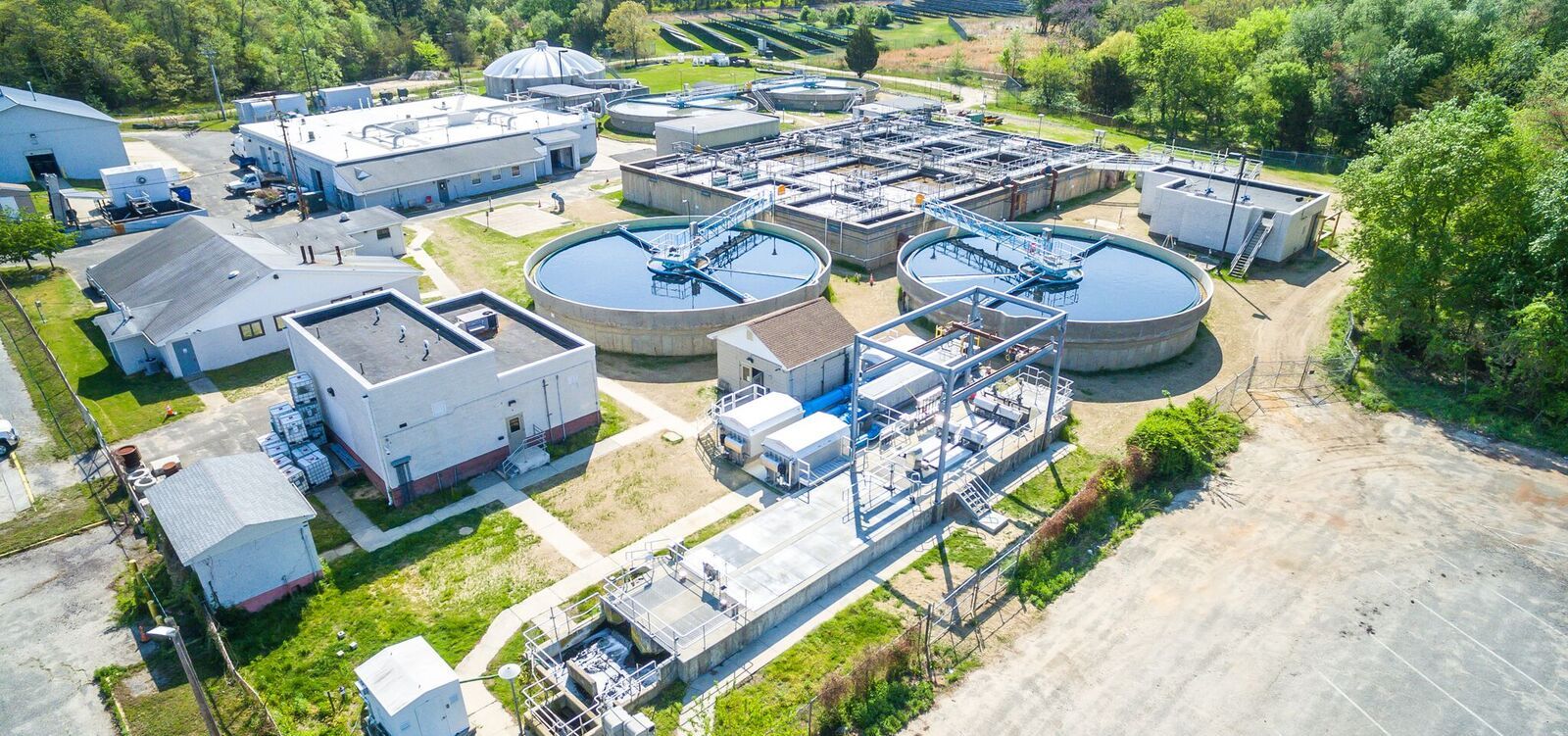
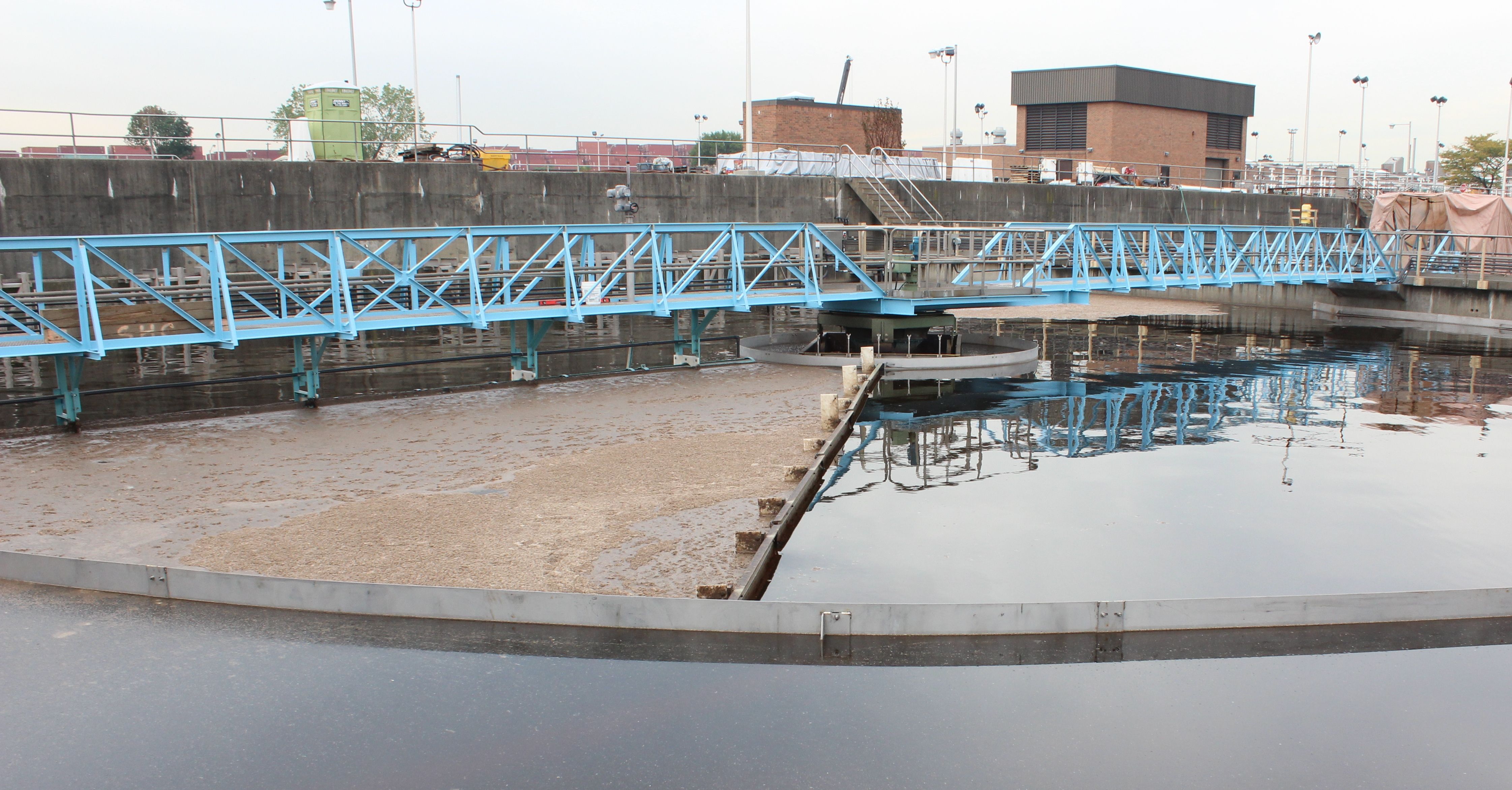
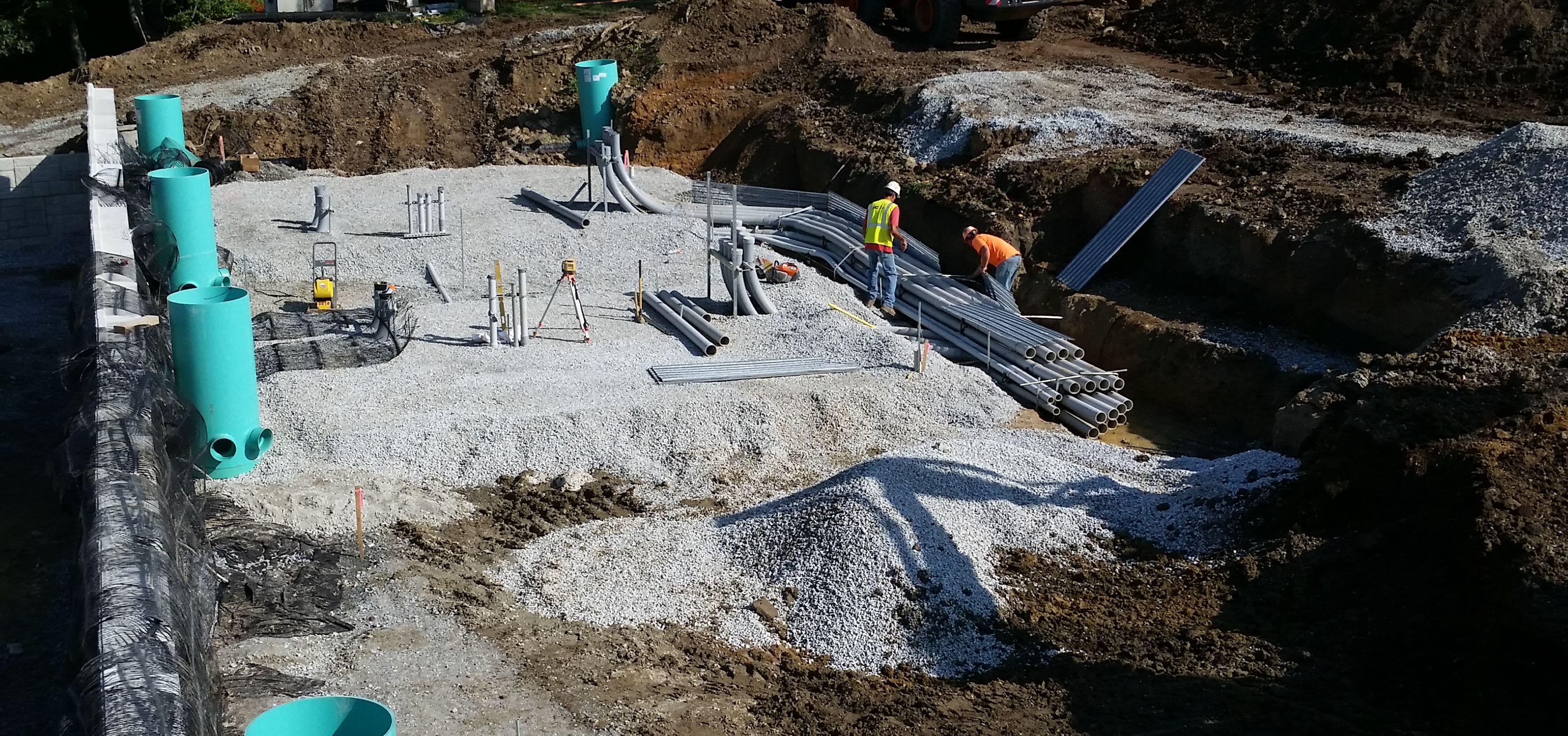
The New Jersey Infrastructure Bank (I-Bank) is an independent State financing authority that provides and administers low-interest loans to eligible municipalities, counties, regional authorities, and water purveyors to finance critical infrastructure projects throughout New Jersey. The I-Bank administers three financing programs: the NJ Water Bank, the NJ Transportation Bank, and the NJ Resilience Infrastructure Bank.
The I-Bank partners with the NJ Department of Environmental Protection (NJDEP) to administer the Water Bank, the NJ Department of Transportation (NJDOT) to administer the Transportation Bank, and the NJ Office of Emergency Management (NJOEM) to administer the Resilience Infrastructure Bank.
The I-Bank’s mission is to finance infrastructure investments that improve water quality, safeguard drinking water supplies, enhance resilience to natural hazards and the effects of climate change, protect public health and safety, reduce roadway congestion, modernize transportation systems, and reinforce New Jersey’s vital role as a regional and national corridor for commerce. By facilitating investments in essential public infrastructure, the I-Bank promotes sustainable economic growth, strengthens communities, and enhances the quality of life of New Jersey residents for generations to come.
Image Gallery
-cropped.9HnZv8aS.JPG)

-cropped.1bYadbwX.jpg)
-cropped.RCOclbu7.jpg)
ESG Program
Learn about our environmental, social, and governance program, and how we bring those values to life with green bonds, sustainable projects, and more.
News
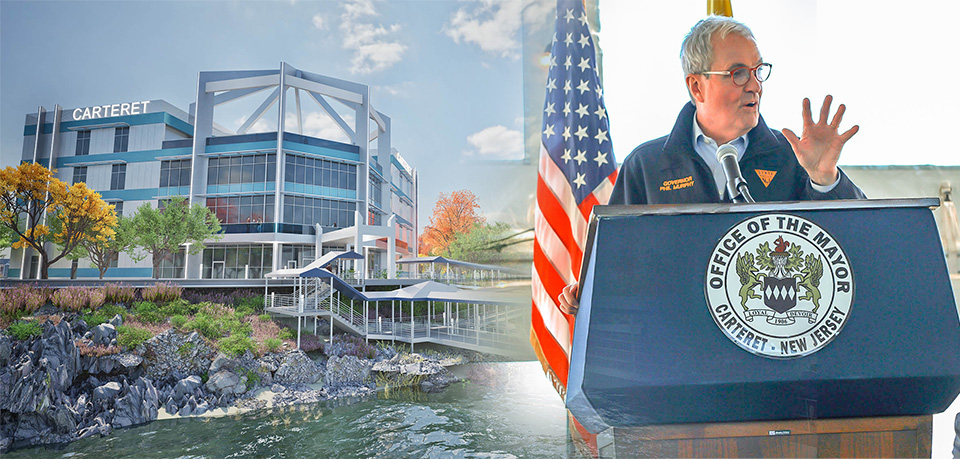
The Borough of Carteret officially broke ground on Friday on the Carteret Multimodal Ferry Terminal Building, a transformational infrastructure project more than three decades in the making. Located on a former DuPont brownfield site along the Arthur Kill waterfront, the project will reshape regional transportation, spur economic development, and expand public access to the waterfront.
The $48 million terminal represents a major step forward in Carteret’s long-term vision to reintroduce ferry service for the first time since the 1950s and establish a fully integrated, multimodal transportation hub connecting Central New Jersey to New York City and other regional destinations.
Speakers at the groundbreaking ceremony included Governor Phil Murphy, Assembly Speaker Craig Coughlin, New Jersey Department of Transportation Commissioner Francis K. O’Connor, and Carteret Mayor Ronald L. Reiman. During his remarks, Governor Murphy praised Mayor Reiman as one of the best mayors in the state, “a person who gets things done.”
“I am proud to deliver the expansion of ferry service to New York City from Carteret,” Governor Murphy said. “From the beginning of my Administration, we have invested in environmentally friendly transportation infrastructure that provides commuters with more options and reduces traffic on our roads. I am grateful to Mayor Reiman and our partners in Carteret for bringing this new transportation hub to life, one that will drive economic growth throughout the region.”
Assembly Speaker Craig Coughlin stressed the long-term vision behind the project. “I’ve had the privilege of representing the Borough of Carteret for nearly 16 years, and during that time I’ve seen firsthand how special this community and its leadership truly are,” Coughlin said. “The ferry represents an extraordinary opportunity for Carteret but today is really a testament to an unyielding and relentless vision, a vision Mayor Reiman committed to and built strong partnerships around. The State has invested $30 million in this project because we believe in it, and because Mayor Reiman’s leadership has helped make Carteret the best it can be.”
“This is more than a construction project, it’s a generational investment in Carteret’s future,” said Mayor Reiman. “This terminal represents progress, partnership, and a shared commitment to providing residents with modern transportation options. It stands as a symbol of Carteret’s continued transformation from an older industrial town into a revitalized waterfront community and a regional destination for commerce, recreation, and innovation. Much like the Borough’s RWJ Health Center, URSB Performing Arts and Events Center, and its growing downtown mixed-use arts district, the ferry terminal represents a generational investment in Carteret’s future. The terminal building will house ferry and marina operations while also supporting commercial, retail, entertainment, event, and leasable office space.
Commissioner O’Connor added, “It’s just amazing what’s going on here in Carteret. I’m proud to be here, and I’m proud of our partners, NJ Transit, the New Jersey Turnpike and the FTA (Federal Transit Administration), along with Congressman (Frank) Pallone. It’s just a great joint effort from all levels of government working with the local community and this great Mayor getting this done.”
The project is also historic at the state level. Financing includes up to $20 million in short-term loans from the New Jersey Infrastructure Bank’s Transportation Bank, marking the Transportation Bank’s first-ever marine loan.
“This project demonstrates how innovative financing can support modern transportation solutions,” Mayor Reiman said. “The Infrastructure Bank recognized the regional value of this ferry terminal and stepped up as a critical partner in making it happen.”
The New Jersey Infrastructure Bank is providing interim financing while federal and state grants are reimbursed, ensuring construction remains on schedule.
The Carteret Multimodal Ferry Terminal has been made possible through collaboration among federal, state, regional, and local partners, including the New Jersey Department of Transportation, the North Jersey Transportation Planning Authority, the New Jersey Infrastructure Bank, the New Jersey Department of Community Affairs, the Federal Transit Administration, and the U.S. Department of Transportation.
Project partners include Potter Architects, CME Engineering, Torcon, Beacon Planning, and Brockwell & Carrington Contractors, led by Michael Dassatti II.
Water-based terminal work, dredging, and bulkheading are complete. Upland improvements are underway, one ferry vessel is currently docked at the marina, and a second vessel is under construction in New Orleans.
“This groundbreaking is about building opportunity, access, and long-term prosperity,” Mayor Reiman said. “It reflects what’s possible when vision, persistence, labor, and strong partnerships come together.”
The Carteret Multimodal Ferry Terminal is expected to become a cornerstone of regional mobility and a lasting symbol of the borough’s continued growth and reinvention.
View full article below.
NJDEP COMMISSIONER LATOURETTE, EPA ADMINISTRATOR GARCIA AND I-BANK OFFICIALS MARK BILLION-DOLLAR WATER INFRASTRUCTURE MILESTONE
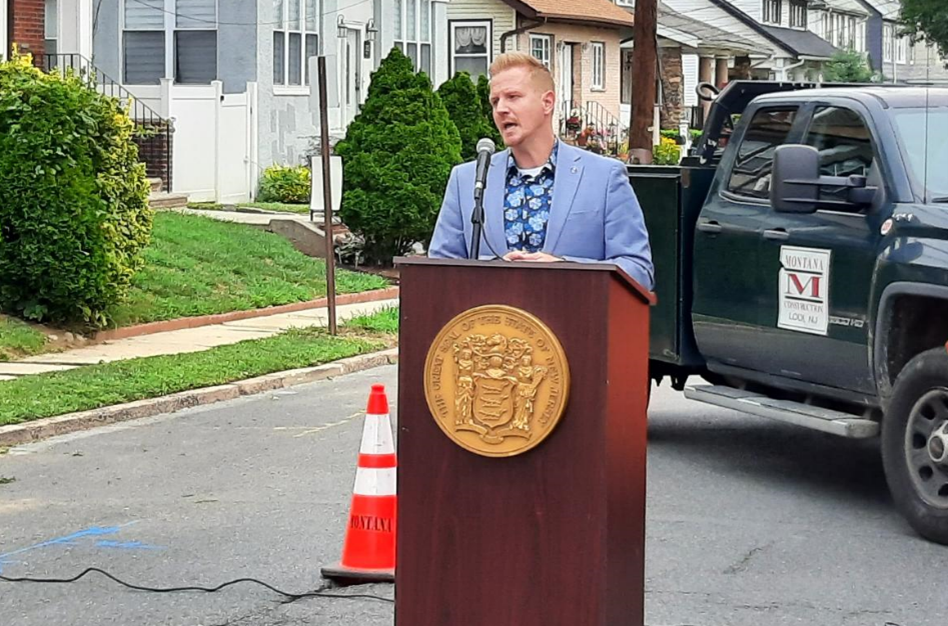
The New Jersey Water Bank, a partnership between the New Jersey Department of Environmental Protection and the New Jersey Infrastructure Bank that provides low-cost financing for projects to improve local clean- and drinking-water infrastructure, has for the first time surpassed $1 billion in fiscal year project financing, Environmental Protection Commissioner Shawn M. LaTourette, EPA Regional Administrator Lisa Garcia and Infrastructure Bank officials announced today.
In Fiscal Year 2024, which concluded June 30, the Water Bank provided financing for 116 clean water projects (wastewater and stormwater treatment) totaling $838 million and financing for 31 drinking water projects, totaling $240 million. These projects represent a combined $1.078 billion in infrastructure financing. The previous record was $769.5 million in Fiscal Year 2021.
This record funding is being used to replace lead and galvanized service lines, install PFAS treatment systems, mitigate stormwater discharges, address combined sewer overflows, upgrade wastewater treatment, reduce flooding, and more. The announcement was made during a news conference in Irvington, where New Jersey American Water has been using more than $48 million in Water Bank financing to replace some 5,000 lead and galvanized residential service lines.
“In order to combat the effects of climate change, we must ensure the resilience of water infrastructure in the state,” said Governor Phil Murphy. “With $1 billion of new project financing, New Jersey’s Water Bank is making transformational progress in securing our water resources to guarantee the safety of drinking water supplies and protecting public health. By funding these critical projects, we can support the health and wellness of New Jerseyans and provide vital support to communities that need it most.”
“Safe and reliable water infrastructure is critical to the vitality of our communities,” Commissioner LaTourette said. “This record-setting, billion-dollar investment in our water infrastructure throughout the state demonstrates the high level of commitment that our local governments and water systems are making to protect public health and the environment. It also underscores the proud and productive partnership between the Murphy Administration and the Biden-Harris Administration to enhance the quality of life and create jobs through infrastructure investments.”
It also points to the importance the Murphy Administration places on protecting water supplies. The DEP launched the Our Water’s Worth It campaign earlier this year to raise public awareness about the fundamental importance of our water supplies, the threats they face, and the steps DEP is taking to ensure all New Jerseyans have access to clean drinking water and healthy waterways.
“This project is a perfect example of the historic federal Bipartisan Infrastructure Law providing vital funds to New Jersey to ensure that our communities, and especially our children, have safe and lead-free drinking water,” said Regional Administrator Lisa F. Garcia. “EPA is happy to partner with New Jersey as we prioritize getting the lead out. There is no safe level of lead exposure, and we know that the primary source of harmful exposure in drinking water is through lead pipes.”
“This year’s loan production is impressive not only for the sheer magnitude of the New Jersey residents impacted by the financed projects, but also for the number of construction-related jobs employing thousands of women and men across the State,” I-Bank Chairman Robert Briant Jr. said. “The Water Bank makes the construction of water projects affordable, particularly for our State’s disadvantaged communities. I want to thank the DEP and the I-Bank for their efforts in creating a healthier environment for all New Jersey residents and fostering economic growth in the state.”
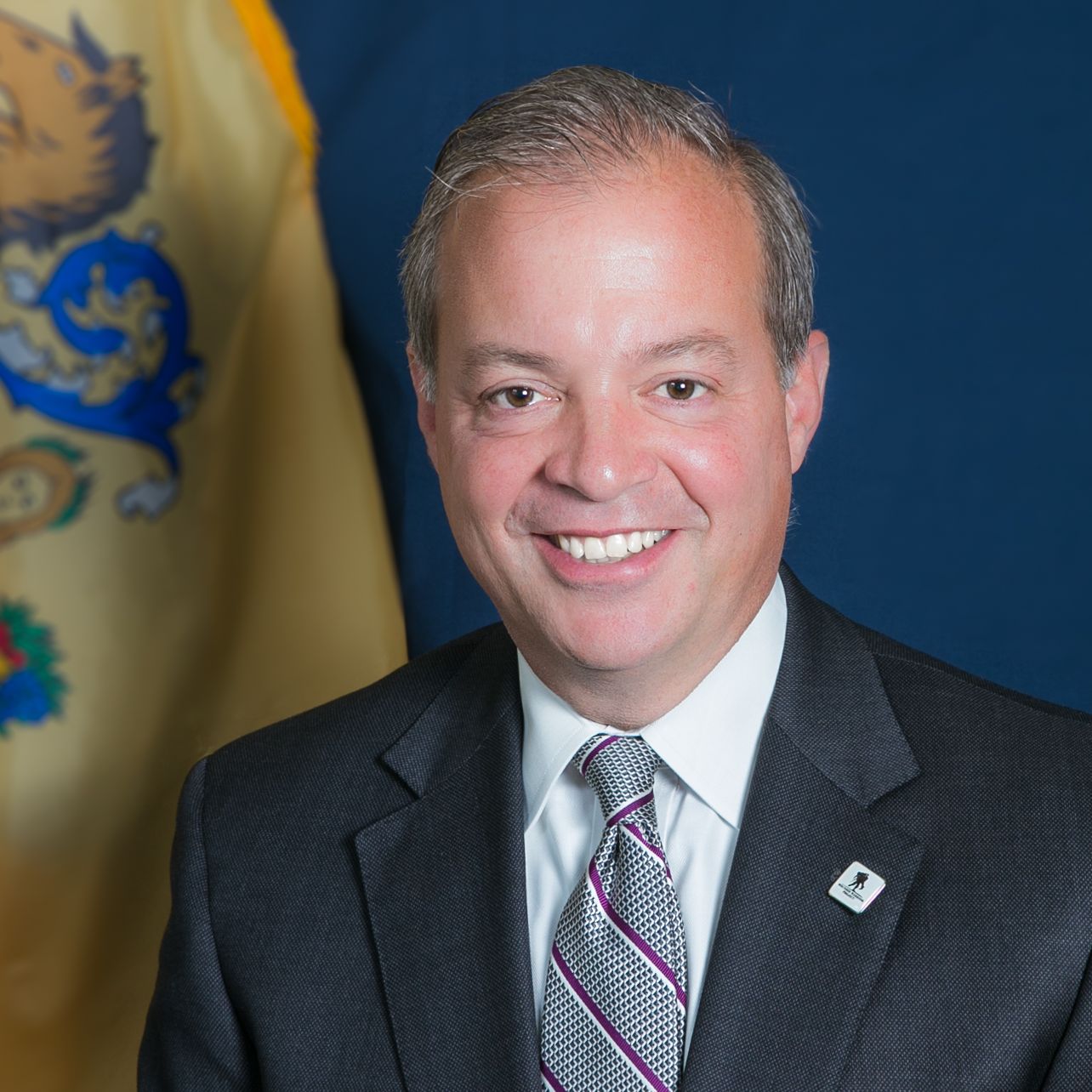
“The accomplishments of the New Jersey Water Bank during this past fiscal year are a testament to the policies, effective collaboration and dedication of every federal, state, and local government employee involved in this program,” said I-Bank Executive Director David Zimmer. “Providing low-cost and affordable funding to more than $1 billion of projects for critical water infrastructure is a vital investment in safe drinking water, clean waterways, and a better quality of life for our communities.”
“New Jersey American Water’s lead service line replacement program prioritizes underserved communities first, and partnering with the I-Bank on these projects helps us double-down on that commitment,” said New Jersey American Water Vice President of Operations Ben Morris. “Through I-Bank financing, we have been able to increase the speed and amount of lead service line replacements in Irvington, as well as eight additional overburdened communities we serve in the state, without increasing the cost for our customers.”
“Distributing $1 billion in State Revolving Funds for water infrastructure projects over the last year is a significant accomplishment,” said Deandrah Cameron, Policy Manager for New Jersey Future. “It is particularly fitting that the final project is a lead service line replacement in Irvington. Lead is a hazardous toxin that poses severe health risks, especially to our most vulnerable populations, and disproportionately affects black and brown communities. Its effects are irreversible; lead poisoning is 100% preventable. We must commend and acknowledge those who work tirelessly to safeguard the health and well-being of our communities. The Jersey Water Works and Lead-Free NJ collaboratives are committed to centering the needs of communities impacted by lead service lines and assisting municipalities and water systems in pursuing a lead-free environment that ensures public health and safety. The strong partnership between communities and the state is why we are proud to be a national leader in lead abatement as a White House Get the Lead Out Partnership member. We support New Jersey communities by elevating these outstanding partnerships as best practices for the rest of New Jersey cities as we continue to lead the nation.”
FY 2024 Project Highlights
Examples of projects that received Water Bank financing in state fiscal year 2024 include:
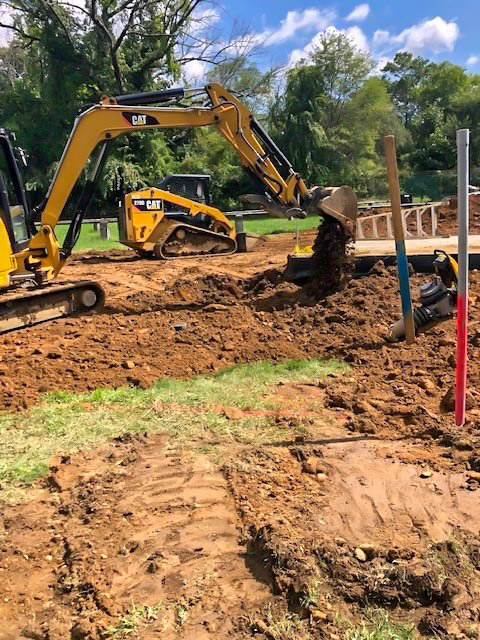
- The Passaic Valley Sewerage Commission received more than $116 million to increase treatment capacity for the purpose of reducing discharges of combined sewer overflows that impact surface water quality in the area. Construction began in March of this year and is anticipated to be completed by the end of 2028.
- The city of Camden received $55 million for the construction of granular activated carbon to treat PFAS and 1,4-dioxane and to upgrade the Morris-Delair Water Treatment Facility. Construction began in February and is expected to be completed by the end of 2025.
- The Bayshore Regional Sewerage Authority received $31 million to construct backup power generation to the sewerage authority and the Monmouth County Bayshore Outfall Authority to safely treat and dispose of wastewater during prolonged power outages.
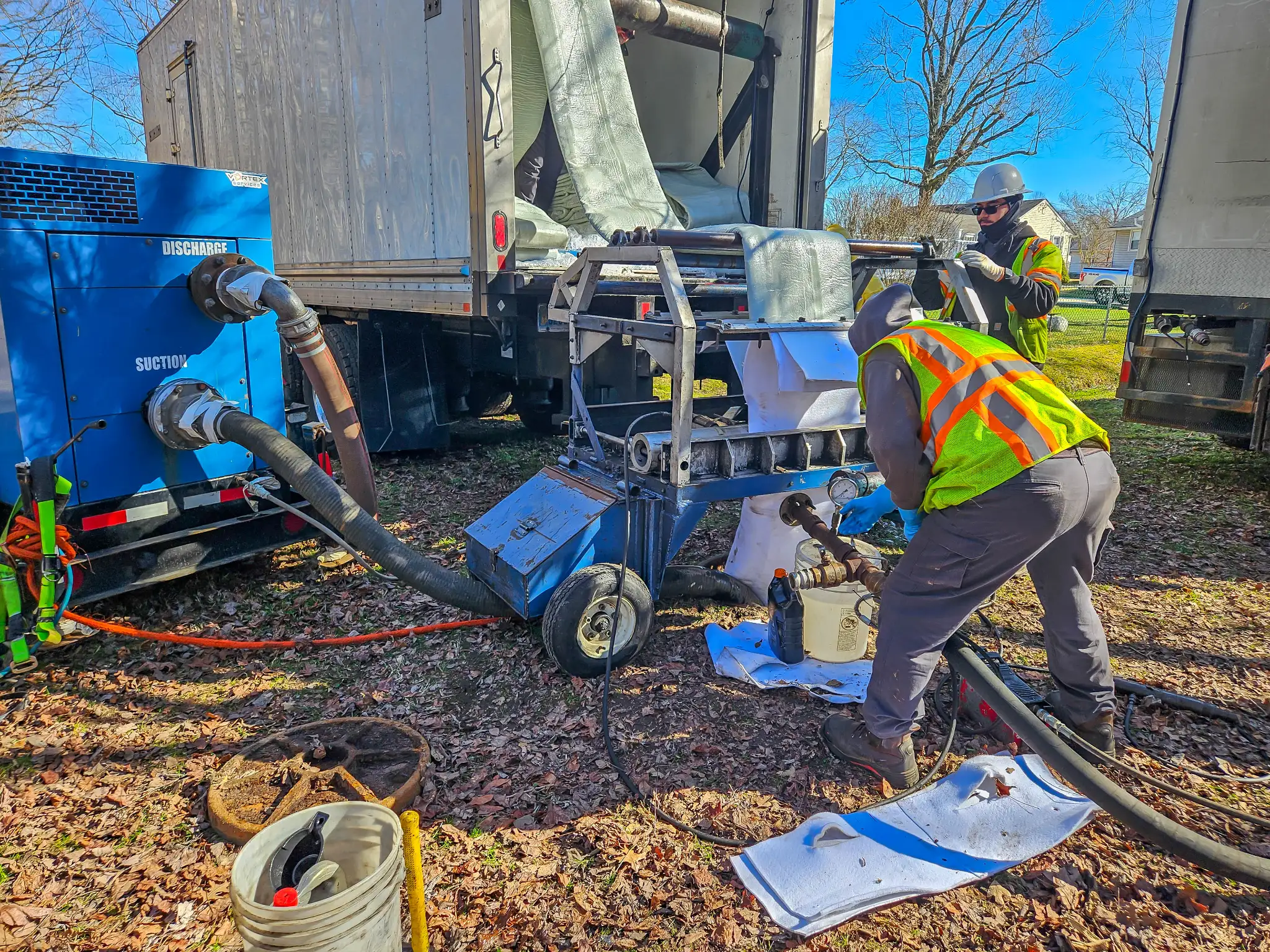
- New Jersey American Water received more than $25 million to expand replacements of lead service lines in Irvington. Combined with financing for a 2022 project, the Water Bank has provided more than $48 million in financing for the replacement of more than 5,000 lead and galvanized service lines in Irvington. Work is expected to be completed by the end of next year.
- The city of Trenton received more than $9 million to replace approximately 1,000 lead and galvanized service lines with copper lines. Construction is expected to begin soon and be completed by July 2026.
- The Jersey City MUA received $9.8 million to replace additional lead service lines in the city. Combined with financing received in FY 2023, the Water Bank has provided more than $21 million for the replacement of approximately 1,600 lead service lines in Jersey City. Construction began in July 2023 and is expected to be completed by June 2025.
The full $1 billion in project closings for 2024 can be found at the DEP’s Water Infrastructure Dashboard. Based on the current application pipeline, the Water Bank expects to again exceed $1 billion in project financing in the current fiscal year. Last month, the Murphy Administration launched an interactive website to assist the public in tracking billions of dollars of overall Bipartisan Infrastructure Law investments in New Jersey.
Building on a History of Infrastructure Investments
Providing New Jersey residents with safe and reliable water is a top priority of the Murphy Administration and Commissioner LaTourette. The DEP works hard every day on programs that protect the long-term viability and safety of water supplies, with a focus on overburdened communities that may have some of most pressing infrastructure needs in New Jersey. Much of New Jersey’s water infrastructure, which was first developed in the nineteenth century, now faces new challenges, such as protecting the public from emerging contaminants that include per- and polyfluoroalkyl substances, or PFAS.
In January 2022, the Murphy Administration launched the state’s $1 billion Water Infrastructure Investment Plan (WIIP), an innovative effort to address the state’s water infrastructure challenges through short and long-term investments that will create good-paying jobs while advancing the state’s environmental justice and climate resilience goals. The WIIP is fueled by federal State Revolving Fund funding through the EPA. This funding received a historic boost from the landmark Bipartisan Infrastructure Law.
The WIIP builds on a strong tradition of infrastructure investment in New Jersey going back nearly four decades. The New Jersey Water Bank administers New Jersey’s State Revolving Fund programs and is a partnership between the DEP and the New Jersey Infrastructure Bank, also known as the I-Bank. The I-Bank is an independent state financing authority that provides and administers low-interest loans to qualified municipalities, counties, regional authorities, and water purveyors to finance water, transportation, and recently, resilient infrastructure projects.
The New Jersey Water Bank administers two programs, the Drinking Water State Revolving Fund (focused on drinking water infrastructure and technologies) and the Clean Water State Revolving Fund (focused on public wastewater and stormwater systems). The Water Bank provides below-market financing by offering borrowers principal forgiveness combined with zero-percent interest rate loans through the DEP and advantageous loan rates from the I-Bank’s AAA-rated bond proceeds. On average, borrowers are able to save more than 30 percent of their total financing costs by borrowing through the Water Bank.
The success of the Water Bank’s low-cost financing program involves the coordination of three different state agencies and authorities under Governor Murphy. The DEP oversees technical review and approval of projects, the New Jersey Department of Community Affairs oversees budget and bonding approval and fiscal oversight of local borrowers, and the I-Bank oversees credit, legal, bond issuance and loan administration.
Since 1987, the Water Bank has made more than $10 billion in short-term and long-term loans to local water systems, saving participating borrowers more than $3.3 billion and creating more than 177,000 direct construction jobs.
The record loan production for Fiscal Year 2024 is meaningful not only for the sheer magnitude of funded projects, but also because these funds are reaching disadvantaged and overburdened communities targeted by the Murphy Administration in the form of principal forgiveness funding. This is making critical infrastructure projects affordable, positioning these communities for a healthier environment and economic growth.
Projects
Leadership Team
Talk to us
Have questions? Reach out to us directly.